
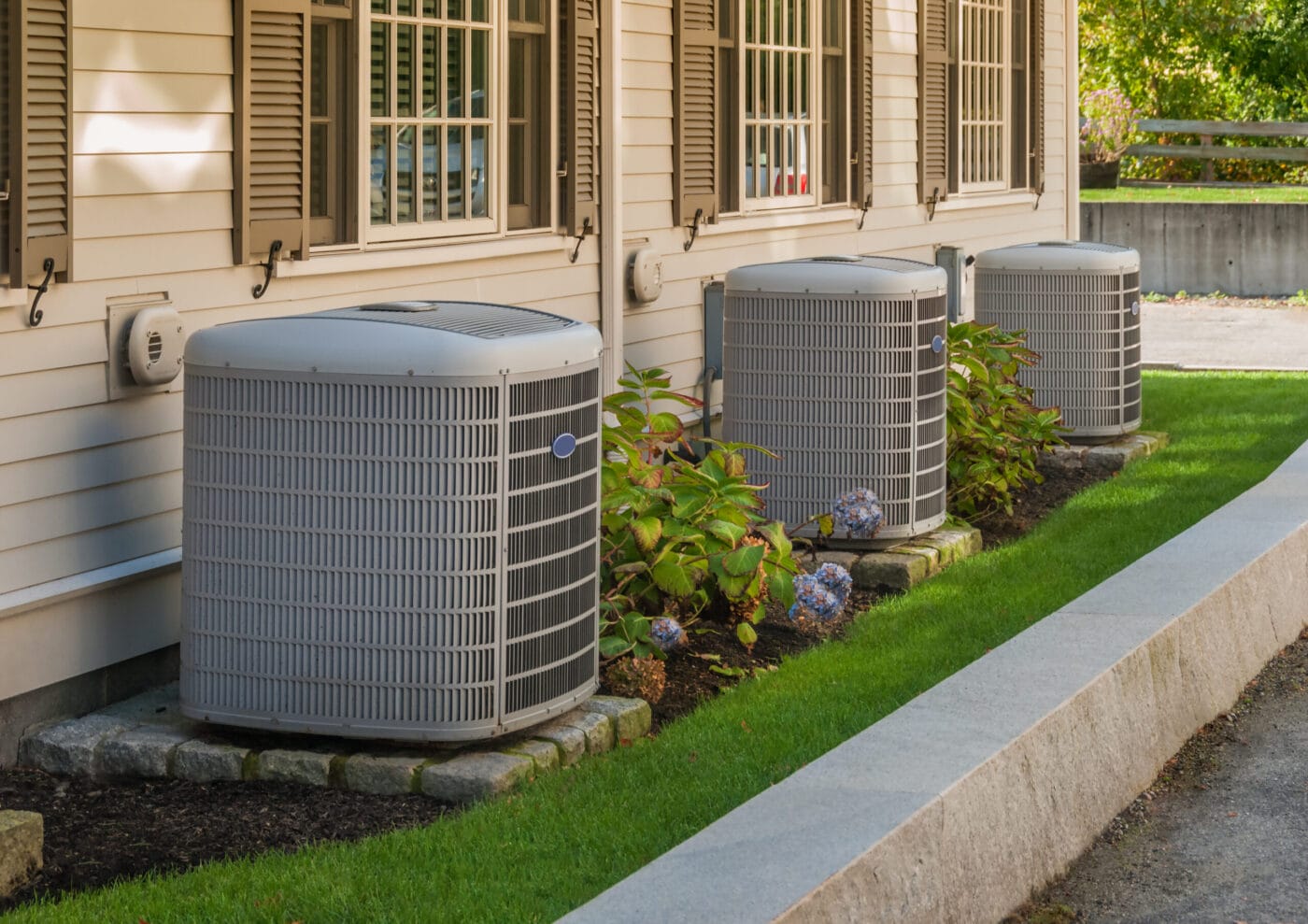
Have you considered how your landscaping affects your air conditioning system? That metal box humming away outside, your AC unit, is working hard to keep you cool during the hot summer months. The plants and other landscaping elements around it can either help it or hurt it. With a few smart choices, you can help your system run more efficiently and potentially last longer.
It’s easy to see your outdoor air conditioner unit as just a piece of machinery. You simply expect it to work. But that conditioner unit, also called the condenser unit, is vital for your HVAC system.
It pulls in the surrounding outdoor air to cool down the refrigerant, a chemical compound used in cooling systems to absorb and release heat. If the air it’s pulling in is scorching hot or blocked by overgrown plants, the whole system has to work overtime. This strain means it uses more electricity and is more likely to need an AC repair when you need it most.
On the other hand, a well-planned landscape can improve energy efficiency. It can give your HVAC unit the space and cooler air it needs to do its job without struggling. The goal is to create a partnership between your garden and your machine, which is especially important for a system like a heat pump that works year-round.
Getting your yard to work with your conditioning unit doesn’t require a full landscape overhaul. A few thoughtful adjustments can make a world of difference. The main goals are to create shade and give your unit enough space to function properly.
The most important rule for AC unit landscaping is to give your condenser room to breathe. Anything that obstructs the airflow forces it to work harder and less efficiently. This is critical for both older air conditioners and modern ductless systems.
You need to maintain a clear zone around the air conditioning unit. Keep all plants, fences, and decorations at least 2–3 feet away from the sides. You also need about 5 feet of open space above it so it can expel hot air effectively, a detail often found in the owner’s manual.
This clearance makes the unit easily accessible for routine AC maintenance and any potential heating repair or cooling service. If a technician can’t get to the HVAC unit, they can’t service it properly. Ultimately, maintaining this clearance is a simple way to avoid future problems.
Your AC unit suffers when it bakes in direct sunlight. A shaded unit can be up to 10% more efficient than one sitting in full sun, according to the U.S. Department of Energy. A cooler unit doesn’t have to work as hard, which saves you money and contributes to a cooler yard.
Planting a tree or some large shrubs to the west or south of your condenser is a good idea to provide shade. Deciduous trees are an excellent option because they create shade in the summer but lose their leaves in winter. This allows the winter sun to warm your home, which can be helpful if you have heat pumps or need furnace repair services.
Just remember that clearance rule when you start landscaping. Plant trees far enough away so their branches won’t hang over the unit as they grow. This prevents leaves and twigs from falling directly into the condenser fins and obstructing air flow.
What’s on the ground around your conditioning units matters, too. Bare dirt turns to mud, which can splash up and clog your unit during a rainstorm. Wood mulch can do the same and may also attract pests that could damage the system’s wiring.
A much better option is a gravel garden or rock bed around the base of the condenser. This creates a clean buffer zone that prevents mud splashes and stops grass and weeds from growing too close. It also makes lawn maintenance a little easier and cleaner.
Here is a comparison of common ground cover options.
| Ground Cover | Pros | Cons |
|---|---|---|
| Gravel or Rock | Excellent drainage, prevents weed growth, low maintenance. | Can absorb and radiate heat, increasing ambient temperature. |
| Mulch | Looks natural, retains soil moisture for nearby plants. | Can be blown into the unit, may attract insects and pests. |
| Low-Growing Plants | Visually appealing, helps keep the area cool. | Requires regular trimming, may overgrow without care. |
While an air conditioner unit is essential, it isn’t the most attractive feature of a yard. Many homeowners want to hide it, which is possible to do safely. The key is to conceal the unit without hampering its performance.
A lattice box is an excellent option for hiding the HVAC unit. It allows air to pass through freely while shielding the machine from view. You can even grow noninvasive vines on the lattice, as long as you keep them trimmed back from the unit itself.
Another solution is to use potted plants. This allows you to arrange a green screen that can be moved for AC maintenance or during severe weather. Choose plants that fit the aesthetic of your yard, but be sure their containers are heavy enough so they’re firmly planted and won’t tip over in the wind.
Sometimes, what you don’t do is just as important as what you do. Many homeowners make simple mistakes that put a lot of stress on their air conditioning systems without even realizing it.
We mentioned it before, but it’s the most common mistake we see. People often choose plants that grow too large or plant them too close to the AC unit. While a small boxwood might look fine after planting, it will grow and eventually suffocate the system.
Always prune back shrubs and other plants every spring before the heavy-use summer months arrive. It’s time to check that the 2–3-foot bubble of clearance is always there. This simple step can help you avoid needing an AC replacement prematurely.
When you mow the lawn, where do the grass clippings fly? If your mower is aimed at your condenser unit, you’re shooting thousands of tiny green bits straight into the delicate fins. These clippings build up, block air flow, and can cause the system to overheat.
The same goes for falling leaves, pine needles, and cottonwood fluff, which can be a problem in certain weather conditions. Regularly clear away any debris that collects on or around the unit. This helps maintain good air quality, not just outside, but potentially improves indoor air quality by keeping your system running cleanly.
Your central air unit is built to withstand rain and normal severe weather conditions. But it’s not made for a direct, daily blast from your irrigation system. Constant spraying can lead to rust and corrosion of the electrical components over time.
Hard water is another problem, as minerals can build up on the coils. This buildup makes it harder for the condensing unit to transfer heat efficiently. Check your sprinkler heads and adjust them so they water your lawn and not your HVAC equipment.
By making a few thoughtful choices, you can create a landscape that is both beautiful and functional. Having the proper landscaping around your air conditioning unit helps lower your energy consumption, reduces the chance of costly repairs, and can even extend the life of your equipment. If you need a cooling service or suspect an issue with your system, it’s always best to request service from an HVAC contractor.
1905 S McKenzie St, Foley, AL 36535
Mon - Sun 6am- 10pm
24/7 Emergency Service