
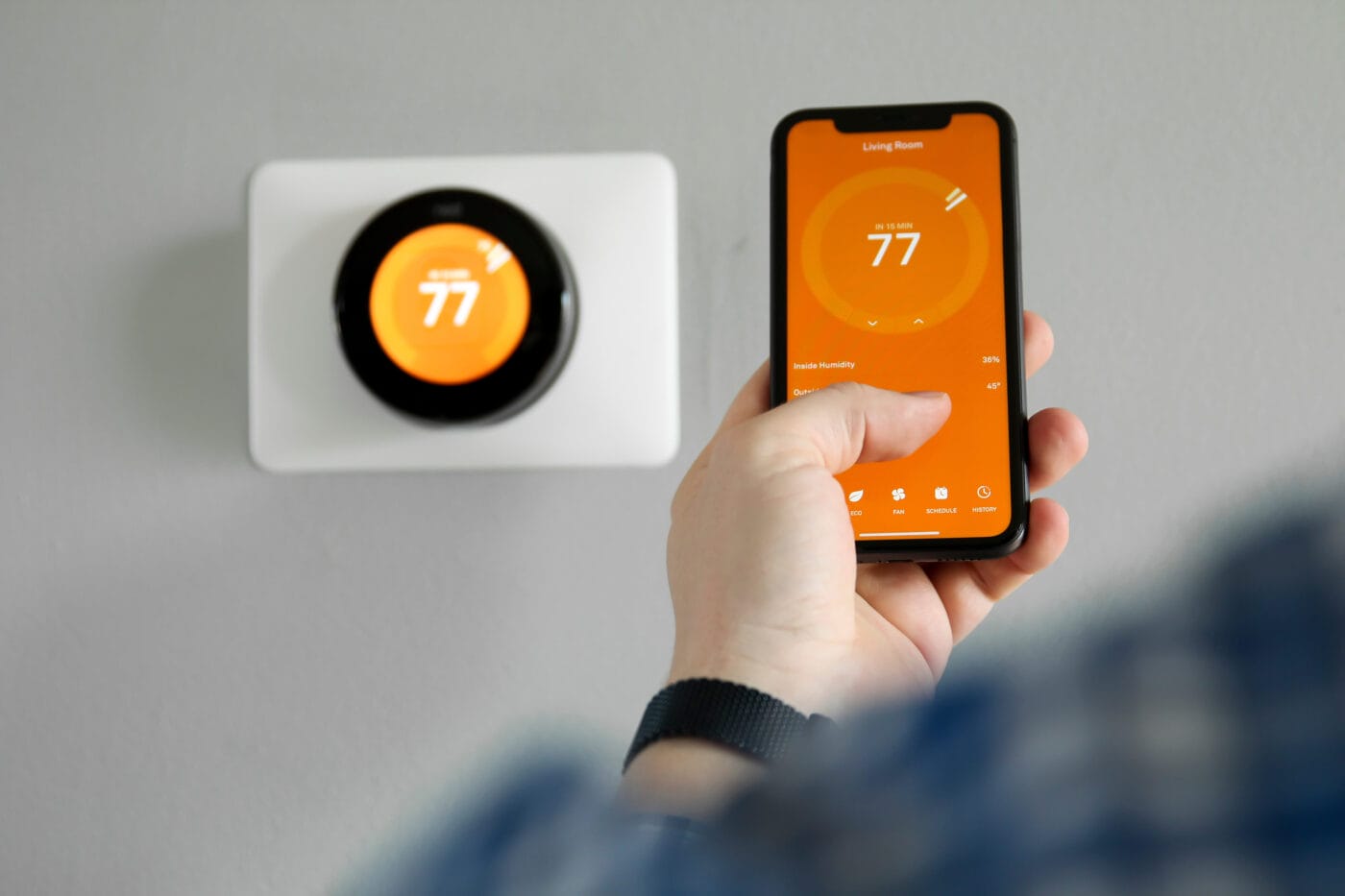
That familiar summer argument over the thermostat is a common household issue. Someone’s always too hot, and someone else is worried about the electric bill that’s about to land. Finding that sweet spot for your summer AC temperature settings can feel like a constant battle between staying comfortable and not spending a fortune.
So, you’re probably looking for a simple solution, a number you can set and forget. While there isn’t one single magic number for everyone, there are proven strategies to get the most from your air conditioning system. In fact, you can finally achieve that perfect balance of a cool home and a reasonable energy bill. You just need a little know-how. This article will walk through how to find what works best for you and your home.
What’s the golden rule for a thermostat? The U.S. Department of Energy suggests setting your thermostat to 78 degrees Fahrenheit when you’re home and need cooling. It sounds a little warm, but there’s a good reason for this number.
This temperature is a solid middle ground for energy efficiency. It’s a temperature where most people can feel comfortable without making their air conditioner run constantly. This reduces the strain on your HVAC system and saves you a significant amount of money over the summer.
But comfort isn’t just about the temperature reading. Humidity plays a huge part in how you feel. High humidity makes the air feel sticky and much warmer than it actually is because it slows the evaporation of sweat from your skin. Your air conditioner naturally helps dehumidify your home, which is why 78 degrees Fahrenheit can feel surprisingly comfortable when the air is dry.
Personal factors also change what feels comfortable. Your age, health condition, and even your activity level can influence your ideal temperature. A more sedentary person may feel colder than someone who is active around the house.
Setting your thermostat isn’t something you do just once. The best approach is to adjust it based on your daily routine. What feels good during the day is different from what helps you sleep at night.
During the day, sticking to that 75–78 degrees Fahrenheit range is your best bet for cost-effective cooling. Keeping your home at a steady, moderate temperature prevents your AC from working overtime. Constant, drastic changes in the setting force your unit to play catch-up, which burns through a lot of electricity.
Find a temperature in that range that feels good to you and your family. Try setting it at 78 degrees Fahrenheit and see how everyone feels. If it’s a bit too warm, try 77 for a day or two to find a compromise that keeps everyone happy.
The goal is to avoid the peaks and valleys of thermostat adjustments. A consistent setting is a much more efficient way to manage your home’s climate.
Nighttime is a different story when it comes to home comfort. To get deep, restful sleep, most people need a cooler environment. Medical experts agree that cooler temperatures can improve your sleep quality by supporting your body’s natural drop in core temperature.
Try lowering your thermostat to around 72–75 degrees Fahrenheit an hour before you head to bed. This gives the AC time to cool the house down and helps signal to your body that it’s time to rest. This small adjustment can make a big difference in how well you sleep through the hot summer nights.
A smart or programmable thermostat makes this easy. You can set it to automatically lower the temperature at night and raise it again before you wake up. This way, you don’t have to think about it, and you get better sleep without wasting energy cooling an empty house all day.
You might think the best way to save money is to turn your AC off completely when you leave. But that can actually backfire. When you get back, your AC has to work extremely hard to remove all the heat and humidity that have built up inside.
This massive effort can use more energy than just keeping the house at a higher temperature. A better strategy is to set your thermostat to a higher temperature while you’re out. Aim for somewhere between 80 and 85 degrees Fahrenheit for optimal energy savings.
This prevents the house from getting miserably hot, but it doesn’t ask your system to maintain a truly cool temperature. When you’re on your way home, you can lower it again, so you walk into a comfortable space. A Wi-Fi-enabled smart thermostat is perfect for this, as you can adjust it from your phone before you even pull into the driveway.
| Situation | Recommended Temperature Range (Fahrenheit) | Reasoning |
|---|---|---|
| When You’re Home | 75–78 | Balances comfort with energy efficiency, reducing strain on the AC unit. |
| While Sleeping | 72–75 | A cooler environment promotes better, more restful sleep. |
| When You’re Away | 80–85 | Saves energy by preventing the AC from fighting extreme heat buildup. |
The 78 degrees Fahrenheit rule is a great starting point, but it’s not the whole story. Several things about your home will influence your ideal summer AC temperature settings.
A large, two-story house cools very differently from a small, one-level home. Heat naturally rises, so upstairs bedrooms are almost always warmer. You might need to adjust vents to direct more cool air upward or even consider a zoned cooling system for better control.
Open floor plans can also be harder to cool evenly than homes with smaller, separated rooms. It takes more effort for the cool air to circulate through a large, open space. Understanding these aspects of your home’s design is important for effective cooling.
For homes with consistent temperature imbalances, a zoned HVAC system can be ideal. These systems use multiple thermostats to control the temperature in different areas or “zones” of the house independently. This allows you to cool the upstairs more than the downstairs, for example, improving comfort and efficiency.
Insulation is your home’s defense against the summer heat. A well-insulated house with good seals around windows and doors will hold onto cool air for much longer. Modern windows with low-emissivity coatings are also a huge help, as they reflect heat while letting in visible light.
If your home has poor insulation or drafty windows, that precious cool air is constantly escaping. This forces your AC to run more often just to maintain the temperature on the thermostat. You can check your attic insulation levels; most homes benefit from having 12–15 inches of insulation.
Improving your home’s insulation and sealing air leaks are some of the most cost-effective ways to boost energy efficiency.
Every person in your home generates body heat. Think of each person as a small heater. A house with five people in it will naturally be warmer than a house with just one or two.
Activities also add to the internal heat load. Cooking a big meal on the stove, running computers, and even watching a large TV all add more heat to your home. On days when you have guests or are doing a lot of cooking, you may need to nudge the thermostat down a degree to compensate.
Where you live has a huge impact on your cooling strategy. A sweltering, humid summer in Louisiana requires a different approach than a dry, hot summer in Nevada. Humidity makes the air feel much heavier and warmer.
In very humid climates, you might feel more comfortable at a slightly lower temperature. This is because the AC needs to run a bit more to pull that extra moisture out of the air, improving home comfort. In dry climates, you might tolerate a higher temperature, especially when using fans.
Your thermostat isn’t your only tool for staying cool. A few simple HVAC maintenance tasks and habits can make a big difference. These will help your AC work more efficiently.
A dirty air filter is one of the most common causes of AC problems. When the filter gets clogged with dust and debris, it chokes the airflow. Your AC unit has to work much harder to pull air through it, reducing its efficiency.
This extra strain not only uses more electricity but can also lead to expensive breakdowns and poor indoor air quality. Check your air filter every month during peak summer usage. You should plan on replacing it at least every three months to keep your system breathing easily.
Tiny gaps around your windows and doors can let a surprising amount of cool air out. Take a walk around your home and feel for drafts near windows, exterior doors, and even electrical outlets. You can easily seal these leaks with weatherstripping or caulk.
It’s a small weekend project that can pay off big. By keeping the cool air in and the hot air out, you let your AC do its job more effectively. You’ll feel more comfortable and see the savings on your bill.
Ceiling fans and portable fans are great for helping you feel cooler. They create a wind-chill effect on your skin by speeding up the evaporation of sweat. This can make a room feel several degrees cooler than it actually is.
This allows you to set your thermostat a little higher without sacrificing comfort, saving money. Just remember that fans cool people, not rooms. There is no benefit to leaving a fan on in an empty room, so turn it off when you leave.
The sun streaming through your windows can heat up your home quickly. This is especially true for windows that face south or west. Keep your blinds, shades, or curtains closed during the hottest parts of the day.
This simple act acts as another layer of insulation. It blocks the sun’s powerful radiant heat from entering your living space. It’s a free and easy way to reduce the workload on your air conditioner and lower your energy bills.
Your appliances generate a surprising amount of heat. On the hottest days, try to reduce this extra heat load. Use a microwave or slow cooker instead of the oven, or cook outside on the grill.
Wait until the cooler evening hours to run the dishwasher or do laundry. Incandescent light bulbs also produce a lot of heat, so consider switching to cooler, more efficient LEDs. Every little bit helps keep the ambient temperature down.
There is a lot of bad advice out there about air conditioners. Let’s clear up a few of the most common myths. Understanding the truth can save you both money and frustration.
This is probably the most widespread myth. When you get home to a stuffy house, it’s tempting to set the thermostat to a very low temperature, such as 65 degrees Fahrenheit. You might think this will kick the AC into overdrive and cool the house in record time.
But that’s not how air conditioners work. Your AC’s compressor runs at a single speed, delivering cool air at a constant rate regardless of the temperature you set. Setting it extra low just makes the system run for a longer period of time, wasting energy without speeding up the cooling process.
As we discussed earlier, this one seems logical, but it’s not true. It takes a huge amount of energy for your system to bring the temperature down from 90 degrees Fahrenheit to a comfortable 78 degrees Fahrenheit. The heat and humidity that build up in the walls, furniture, and flooring also have to be removed.
It’s much more efficient to let the temperature rise to a moderate level, such as 85 degrees Fahrenheit. Your HVAC system uses far less energy to maintain that temperature or cool down from it than it does to start from scratch every single day. You’ll actually see a lower bill with this strategy.
Some thermostats have an “on” setting for the fan, which keeps it running continuously. Some people think this helps circulate air and keep the temperature even. While it does circulate air, it can have an unwelcome side effect on humidity.
When the cooling cycle stops, the coils inside your unit are still wet with condensation. If the fan keeps running, it can blow that moisture right back into your house, raising the indoor humidity level. It is usually best to leave the fan setting on “Auto” so it only runs during cooling cycles.
Sometimes, no amount of adjusting the thermostat will solve the problem. There are times when you need an expert to take a look. Recognizing the signs of a failing HVAC system can save you from a complete breakdown in the middle of a heatwave.
If your AC is running constantly but your house never feels cool, that’s a red flag. If you hear strange grinding, squealing, or rattling noises, it’s time to call a pro for seasonal maintenance. A sudden, unexplained jump in your energy bill is another clear warning sign.
Scheduling a professional tune-up at least once a year is a smart move. A technician can clean the system, check refrigerant levels, and spot small problems before they become big, expensive ones. Think of it as a small investment in your comfort and your system’s long-term health.
Finding your perfect summer AC temperature settings is more of an art than a science. It’s about creating a personal strategy that fits your home, your lifestyle, and your budget. The 78 degrees Fahrenheit rule is a fantastic place to start, but you’re now equipped with the knowledge to fine-tune that for your own needs.
By understanding how your home, your habits, and your local climate all play a role, you can take control of your indoor environment. Use a programmable thermostat, keep up with seasonal maintenance through, and be mindful of your energy use. This approach helps you achieve that ideal balance of cool comfort and smart energy savings, ending the thermostat wars for good.
1905 S McKenzie St, Foley, AL 36535
Mon - Sun 6am- 10pm
24/7 Emergency Service